Stake sportsbook guide: markets, odds, live betting, cash out
The Stake sportsbook works much like any large bookmaker, with one structural difference: your balance lives in cryptocurrency. You get pre-match and live betting, cash out, a bet builder for same-game multis and one of the deepest esports sections around. None of that decides whether you bet well. What does is knowing exactly what each market pays out on, how much margin you are handing over, and when a feature like cash out protects you versus quietly charging you a fee. This guide walks through Stake sports betting with worked numbers rather than slogans.
Disclosure: Tippium may earn a commission if you sign up through our links. It does not change our assessment, and the downsides below are written with the same care as the upsides.
Stake at a glance
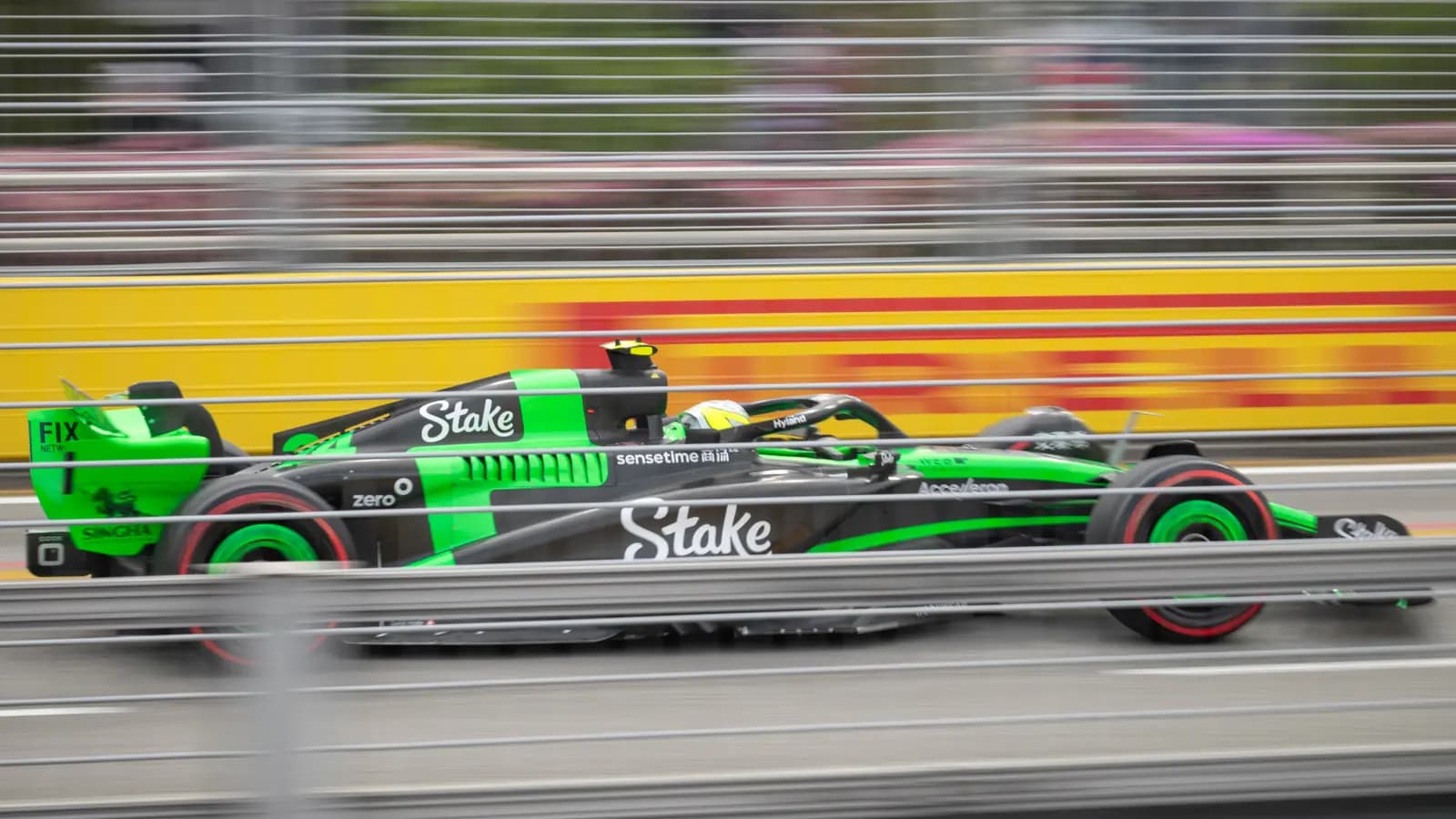
Stake was founded in 2017 by Ed Craven and Bijan Tehrani and is operated by Medium Rare N.V. under a Curaçao licence. It was built crypto-first, covering both a sportsbook and a casino, and accepts more than twenty coins including BTC, ETH, LTC, USDT, USDC, DOGE, BCH, XRP, TRX, BNB and SOL. If you do not hold crypto yet, you can buy it on the site through third-party providers. The brand is hard to miss in elite sport: main shirt sponsor of Everton in the Premier League, title partner of the Stake F1 Team Kick Sauber in Formula 1 from 2023 to 2025, a UFC partnership and Drake as ambassador.
Sponsorships tell you the company has commercial weight. They tell you nothing about whether tonight's price on a particular match is fair. That part is on you, one bet at a time.
Sports and leagues covered
Football
Football is the backbone: the major European leagues, UEFA competitions, international fixtures and a long tail of lower divisions worldwide. Top-flight matches carry dozens of markets each, from match result and goals to handicaps, corners, cards and player markets. Smaller leagues usually come with a thinner menu and lower maximum stakes, which is normal across the industry.
Tennis and basketball
Tennis covers match winner, game handicaps, total games and set betting across ATP, WTA and lower-tier events. In basketball, the NBA and EuroLeague get the most depth: point spreads, totals, quarter markets and player props for points, rebounds and assists.
F1, MMA/UFC and esports
Formula 1 markets include race winner, podium finish, head-to-head driver matchups and qualifying. MMA, with the UFC as its shop window, typically offers fight winner, method of victory and whether the bout goes the distance. Esports such as Counter-Strike, League of Legends, Dota 2 and Valorant get far more attention than at most traditional bookmakers, with map winner, map handicaps and round totals.
The main markets, with examples
1X2 (match result)
Three outcomes at the end of regulation time: home win (1), draw (X), away win (2). Back the home side at 2.10, the game ends 1-1, and you lose. Extra time does not count unless the market name says so, which matters in knockout ties.
Double chance
You cover two of the three outcomes: 1X, X2 or 12. The price drops sharply in return. Home-or-draw at 1.35 wins if the home team wins or draws. It suits a view like "the away side won't win", but it is worth comparing against draw no bet first, which we break down in draw no bet vs double chance.
Over/under (totals)
You bet on more or fewer goals, points or games than a line. Over 2.5 goals needs three or more; a 2-0 loses. Whole lines like 2.0 refund your stake if the total lands exactly on the number, while quarter lines (2.25, 2.75) split your stake across two neighbouring lines.
Asian handicap
It removes the draw by giving one side a head start or a deficit. Home −0.5 only wins if the home team wins. At −1.0, a one-goal win refunds you and a two-goal win pays. At −0.25, half your stake sits on 0 and half on −0.5, so a draw returns half and loses half. Full settlement tables are in our Asian handicap 0.25 and 0.75 guide.
Both teams to score
"Yes" wins if both teams score at least once; "No" wins if either side fails to score. A 3-0 is a "No", a 1-1 a "Yes". The market is simple but very sensitive to team news: losing a first-choice striker moves the price more than people expect.
Player props
Markets on individual output: anytime goalscorer, shots on target, an NBA player's points, a tennis player's aces. They tend to carry more margin than headline markets and come with their own rules on what happens if the player does not start. Check the market rules for void conditions before you bet, not after.
Reading decimal odds and implied probability
Decimal odds show your total return per unit staked, stake included. At 2.50, a £10 bet returns £25 if it wins: £15 profit plus your £10 back. Implied probability is simply 1 divided by the odds, so 1/2.50 = 40%. If you believe the outcome happens more often than 40% of the time, the price is generous; if not, the bookmaker has the edge.
Add up the implied probabilities across every outcome in a market and the total comes to more than 100%. That surplus is the bookmaker's margin. A hypothetical 1X2 priced 2.10 / 3.40 / 3.60 works out at 47.6% + 29.4% + 27.8% = 104.8%, so roughly 4.8% is what you pay for the privilege of betting. Our guide to how betting odds and implied probability work goes deeper.
The practical takeaway: 1.90 against 1.95 looks trivial on one bet. Over several hundred bets it is the gap between losing slowly and hovering near break-even. Price shopping is not obsessive; it is the one edge you control every single time.
Singles, accumulators and bet builder
A single is one selection. An accumulator (acca or parlay) strings together selections from different events and multiplies their odds, and every leg must win. A bet builder combines selections from the same match. Because those outcomes are related, the bookmaker does not simply multiply the odds; it prices the combination as a whole.
| Bet type | How it is built | Upside | Hidden cost |
|---|---|---|---|
| Single | One selection | Lowest margin, easy to measure | Modest prices, less of a thrill |
| Accumulator | Several selections from different games, odds multiplied | Big price for a small outlay | Each leg's margin compounds; one miss sinks the lot |
| Bet builder | Several selections from one game, priced jointly | Lets you back a specific match script | Correlation pricing is hard to check, margin usually higher |
| System bet | Every combination from a group of picks | Pays something even if one pick fails | Multiplies the number of bets and the total outlay |
Why margin compounds in accas
Assume, purely for illustration, that each selection carries a margin of about 5%. In a four-fold the margins do not add up, they multiply: 1.05 to the power of 4 is roughly 1.216, around a 21% theoretical edge for the house over fair odds. A six-fold goes past 30%. That is why long accas are every bookmaker's favourite product. If a tipster bets accumulators, judge them on net units over their full record rather than the occasional headline winner; see single vs combo bets and why same-game parlay odds don't simply multiply.
Stake live betting and cash out
When live betting makes sense
Stake's in-play section updates prices in real time and suspends markets during dangerous moments. Betting live is worth it when you have information the price has not caught up with: a tennis player clearly struggling physically, a side down to ten men from the 20th minute, a tempo wildly different from what the pre-match line assumed. It is not worth it when you are reacting to a goal or trying to win back a loss before half-time. In-play margins are usually a little higher, and speed punishes rushed decisions. If you follow live tipsters, read what changes between live and pre-match tipping first.
Stake cash out: when it helps and when it costs you
Cash out lets you close a bet before the event ends for an amount the bookmaker calculates. That offer has margin built in and nearly always sits a little below the fair value of your position at that moment. Cashing out by habit means paying the fee twice.
- It can make sense when something the original bet did not account for has changed, such as an injury, a red card or rain arriving at a circuit, and you no longer want that exposure, or when the potential return has grown too large relative to your bankroll.
- It usually costs value when you hit it out of nerves while the game is going to plan, or to "lock in" an acca with one short-priced leg left.
- Partial cash out trims risk without closing everything, but the part you settle carries the same discount.
One thing to remember if you copy picks: once you cash out, your result no longer matches the tipster's. We explain the consequences in cash out and tipster pick results.
Settings worth checking before you bet
Spend five minutes in your account and bet slip preferences. First, odds format: choose decimal if you will compare against picks on Tippium, which are always shown that way. Second, odds-change acceptance: in-play prices move between tapping and confirmation. Accepting any change is convenient but can slip you a worse price than you wanted; accepting only higher odds is a sensible middle ground; accepting none means some live bets will be rejected, but you will never overpay without noticing. Third, the currency you display and the coin you bet with: holding a stablecoin like USDT or USDC means your balance does not swing with the crypto market while a bet is pending.
Also look at the deposit limits, breaks and self-exclusion options on your account, and at KYC. Stake verifies accounts in levels and may ask for documents depending on your activity, for example before larger withdrawals.
A practical workflow: verified tipster on Tippium, bet at Stake
- Pick the tipster on record, not on streaks. In the Tippium tipster directory, every profile shows results in net units across the full history, with picks logged before the event starts. You can read how we verify tipsters.
- Read the whole pick. Exact market, line, reference odds (Tippium's odds are bet365 odds) and kick-off time. Over 2.5 is not over 2.25.
- Find the same market at Stake. Open the match and locate exactly the same line. You can check today's odds at Stake and compare them with the pick.
- Bet only at the same price or better. If Stake is shorter than the tipster's odds, decide on a minimum acceptable price in advance. Following picks at worse odds as a habit erodes any edge. See what to do when the odds have moved.
- Record the stake in units. That keeps your results on the same scale as the tipster's.
Bankroll in units
A unit is a fixed slice of your betting bankroll, usually 1% to 2%. With a £500 bankroll and a 1% unit, a 2-unit pick is £10. Units are how you survive the losing runs that arrive even with good tipsters. If the tipster stakes 3 units and you use your own scale, you mirror their conviction without risking more than your bankroll can take. The full method is in bankroll management: the units method.
Funding with crypto: the upsides and what to watch
The upsides: deposits and withdrawals are usually fast, some networks charge very low fees, your bank is not involved, markets are global and stablecoins shield you from price swings. What to watch: with BTC or ETH your balance moves even when you are not betting; a transfer cannot be reversed once sent; using the wrong network can mean losing the funds; winnings may carry tax obligations where you live; and a Curaçao licence does not give the consumer protection of a locally licensed bookmaker. If you are comfortable with that, you can open a Stake account and start with a small amount to test the full deposit-and-withdrawal loop.
Promotions change frequently: daily races, weekly raffles and a VIP programme with rakeback and reloads. There are no fixed amounts we can promise, so check Stake's promotions page and read the terms before accepting any offer.
Availability
Stake only accepts players from countries permitted by its terms. Before signing up, check that yours is one of them and that you comply with local law. Its terms forbid accessing the site from restricted countries via VPN, and doing so can lead to the account being closed and the balance withheld.
Stake sportsbook FAQ
Is cash out available on every Stake market?
Not necessarily. It depends on the event, the market and the moment: some markets may not offer it, and it can be suspended during dangerous play in-running. Check the bet slip before you count on it.
Can I follow Tippium picks at Stake?
Yes, as long as you find the same market and line. Tippium picks record bet365 odds as the reference; Stake's price may be the same, better or worse, so compare before betting and log the odds you actually got.
Singles or accumulators at Stake?
Singles, if you want to measure and control risk. Accumulators compound the margin on every leg and widen variance. If you use them, keep the legs few and the stakes small in units.
Do I need to buy crypto before betting?
You need a balance in one of the accepted coins. You can send it from your own wallet or exchange, or buy it on the site through third-party providers, which apply their own fees and checks.
Are live odds worse than pre-match?
Not always worse, but in-play margins are usually a little higher and prices change in seconds. Set your odds-change preference so you never bet at a price you did not choose. If you want to try it, explore Stake live betting with small stakes.
Want to start with the part that matters most, the tipster? Create a free Tippium account and follow tipsters with a verified record.
18+ only. Sports betting carries a real risk of loss and most bettors lose money over the long run. Only bet what you can afford to lose, set limits, and if gambling stops being entertainment, reach out to the responsible gambling services in your country.